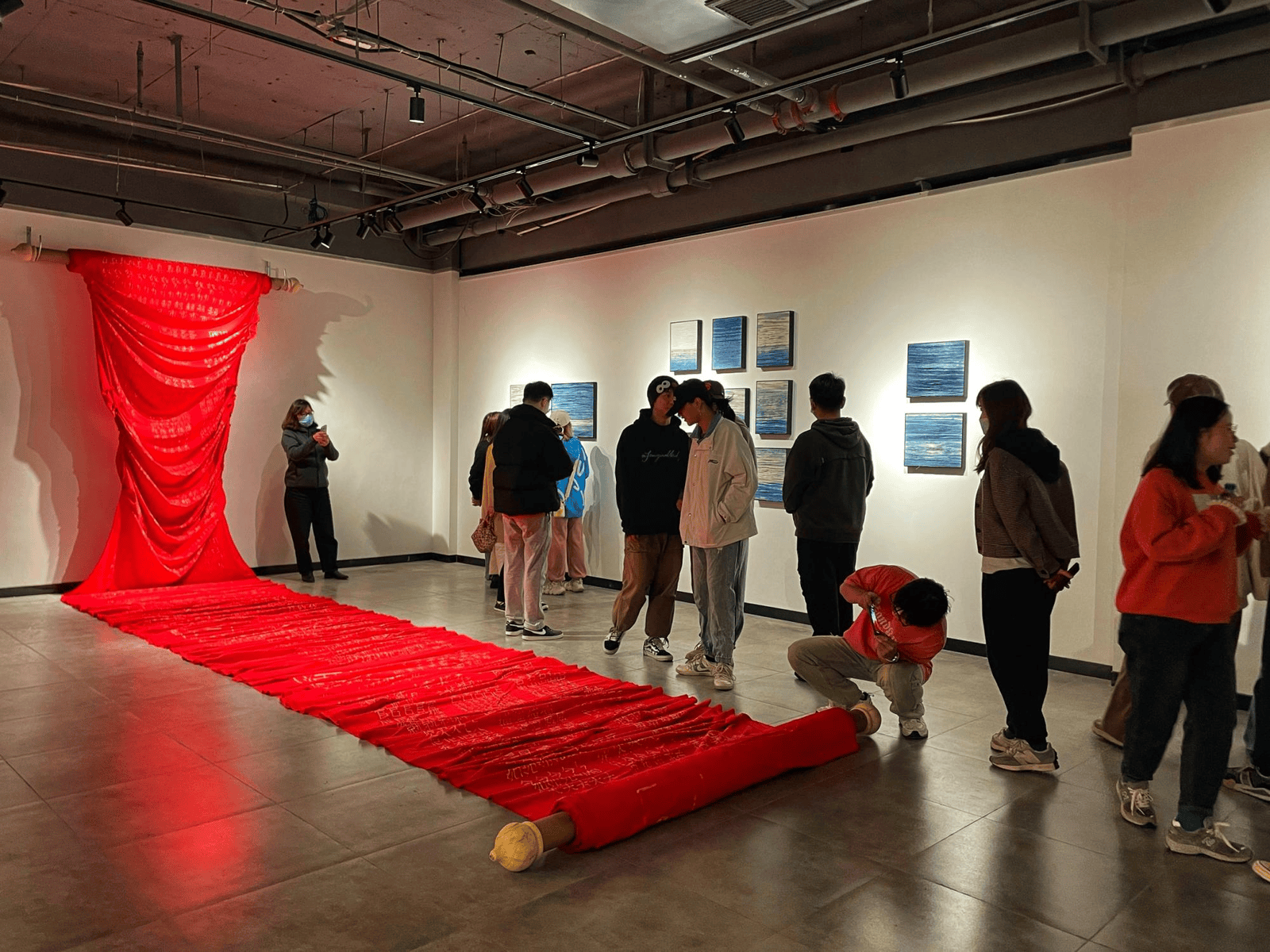
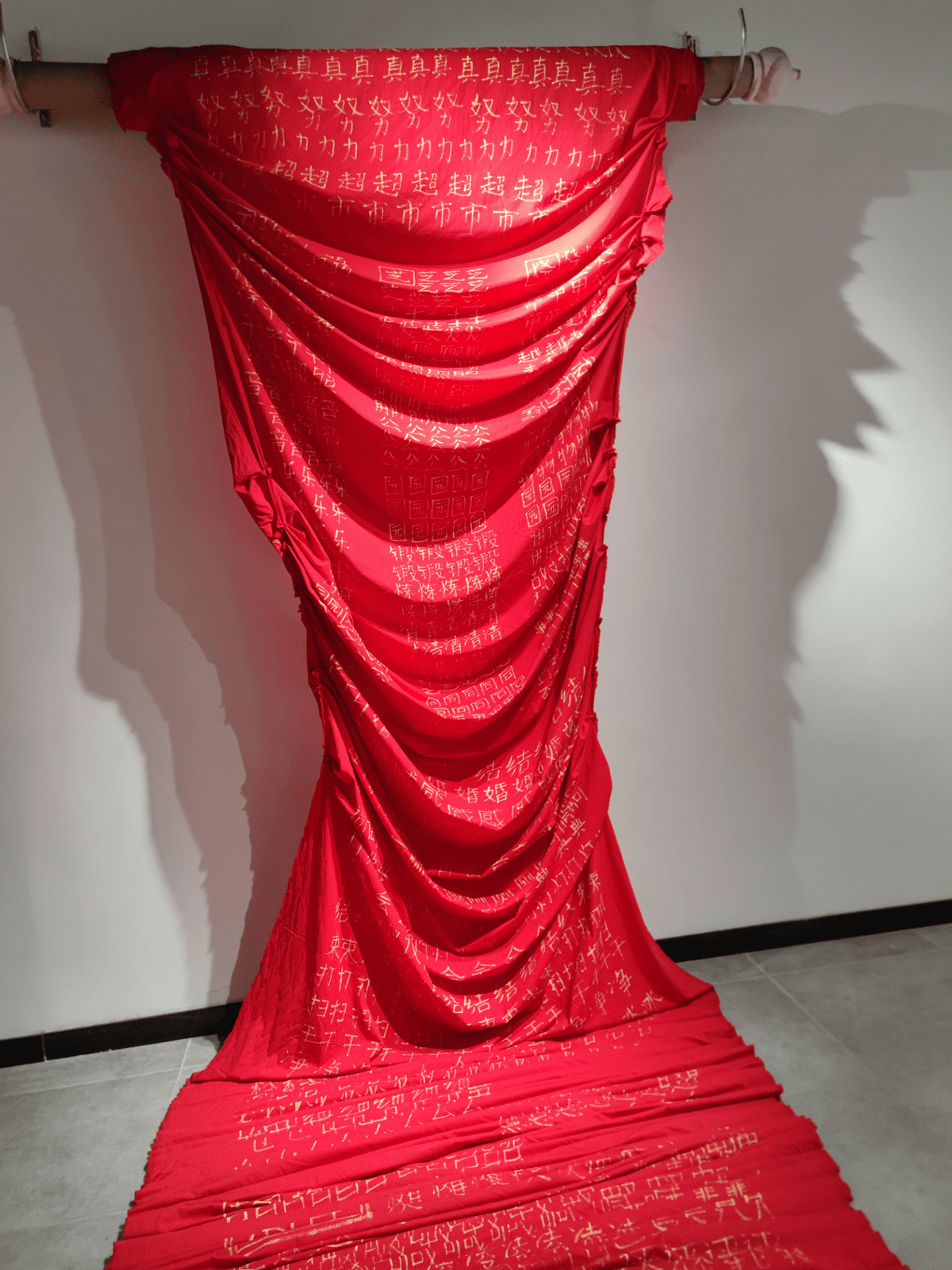
In the 21st century, an artist’s imagination has no limits. Like most artists, I draw inspiration from my own life and surroundings. Coming to China gave me the chance to learn Chinese, an ancient language and one of the most complex in the world. Back in the Han Dynasty (200 BC–200 AD), as Buddhism spread, many Indian Sanskrit concepts were translated into Chinese. Around 200 AD, roughly 37,000 Sanskrit words entered the language. During the Tang Dynasty, another 25,000 words were added, followed by thousands more by 900 AD. Originally, Chinese vocabulary was limited, making it hard to express complex ideas. Over time, characters combined and evolved, expanding the language. That is why you can see clear Indian cultural influences and shared concepts between Chinese and Indian languages. The written script and its sounds are equally beautiful; learning it felt like falling under a magician’s spell.
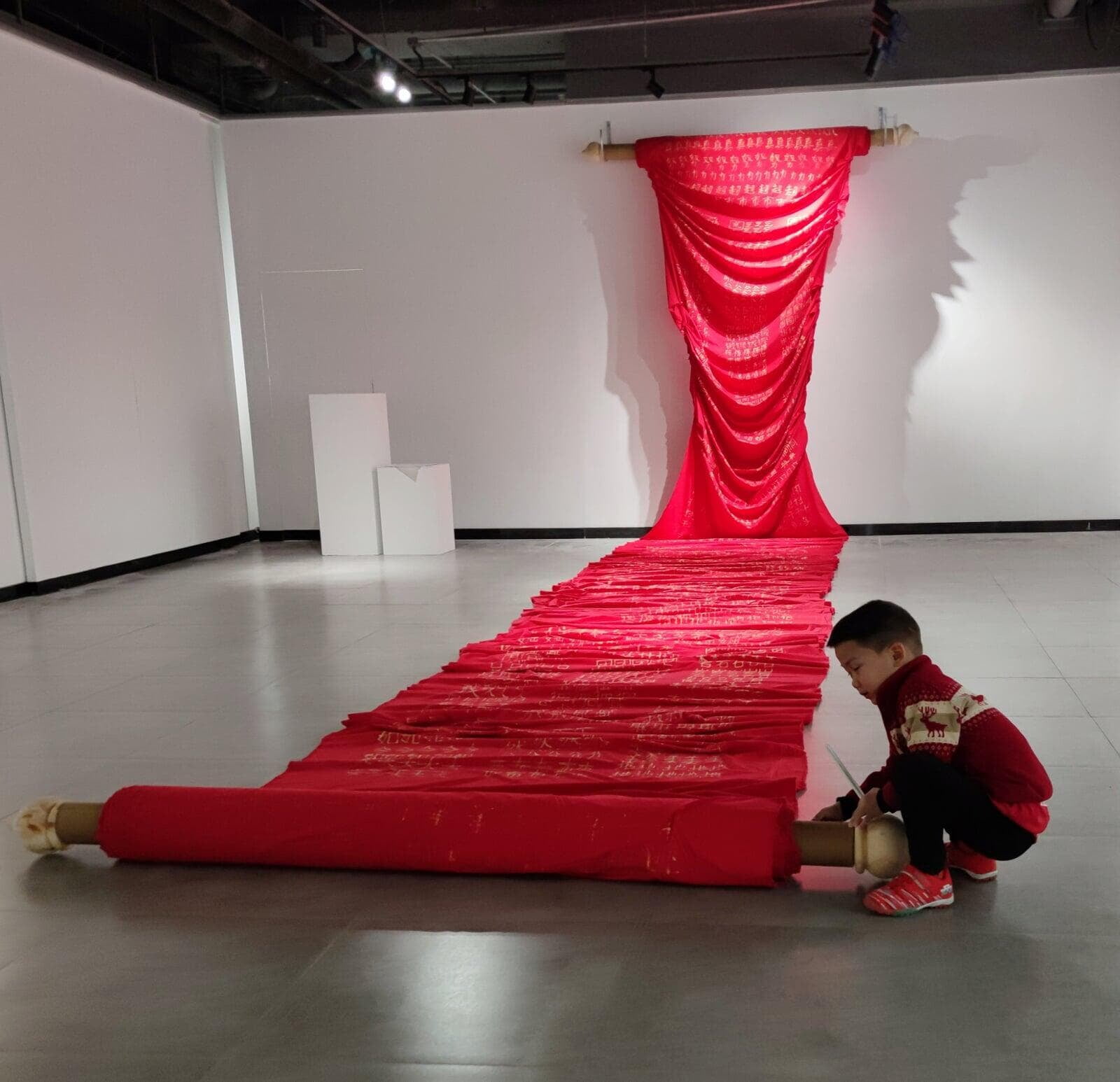
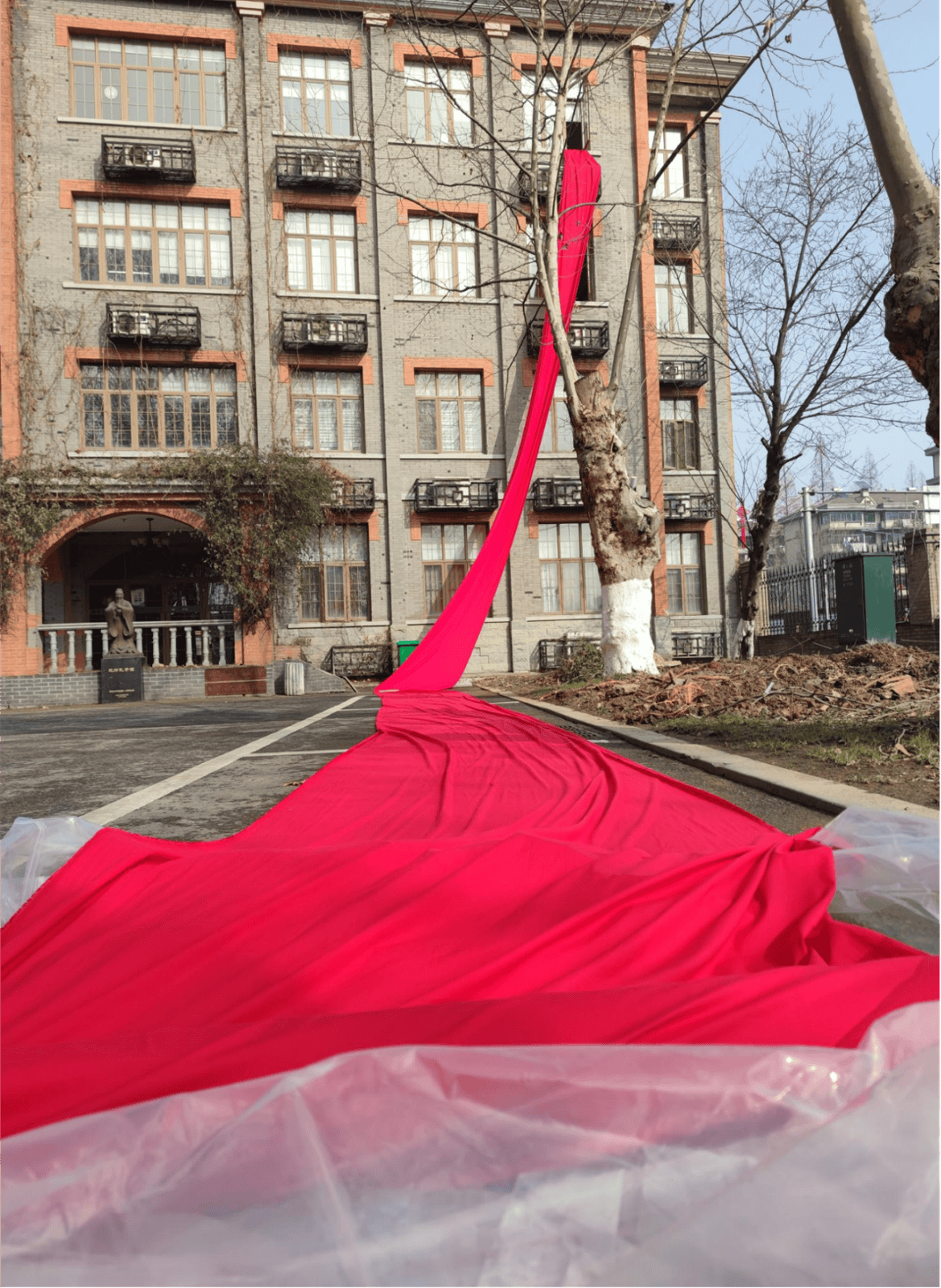
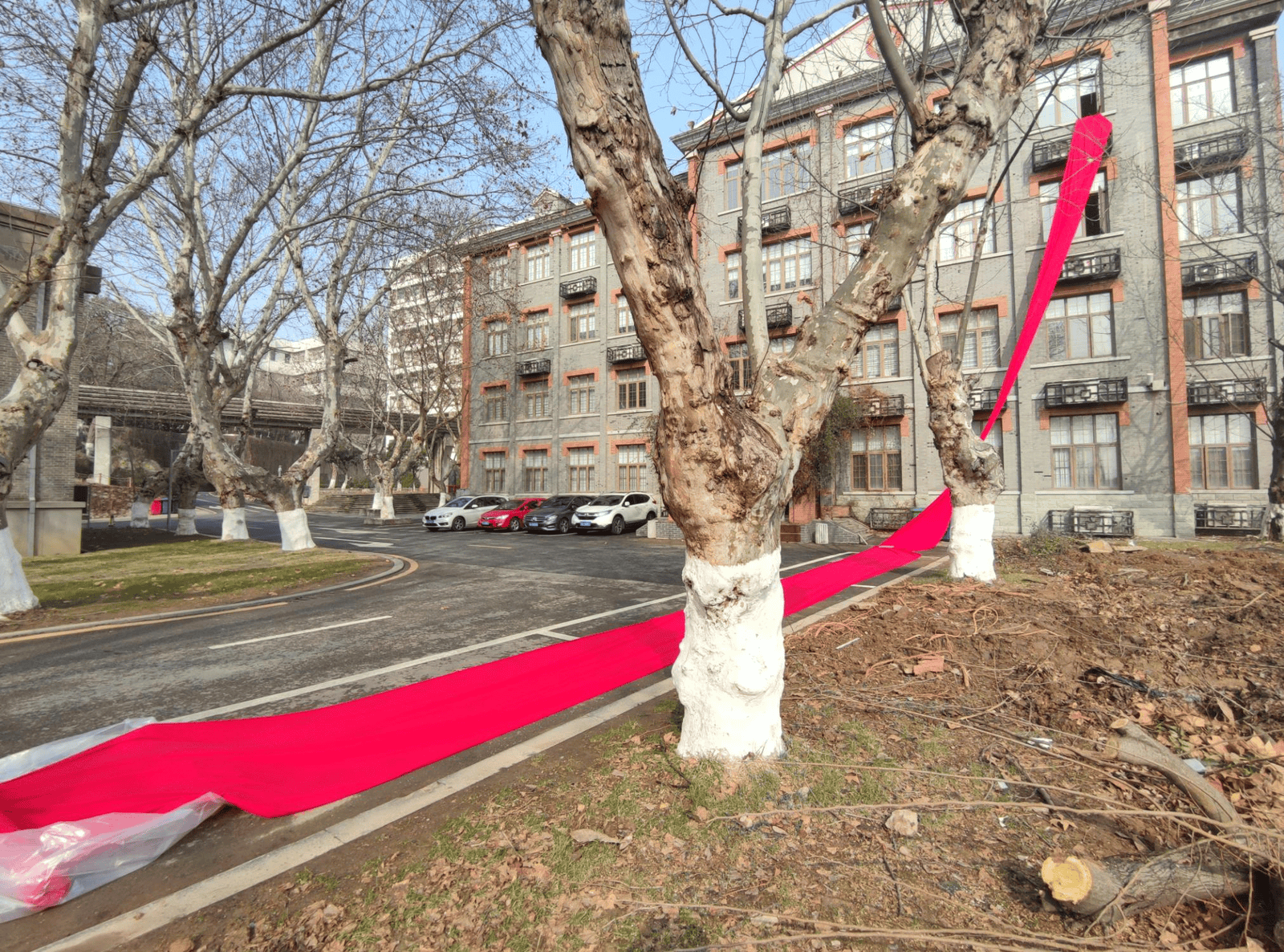
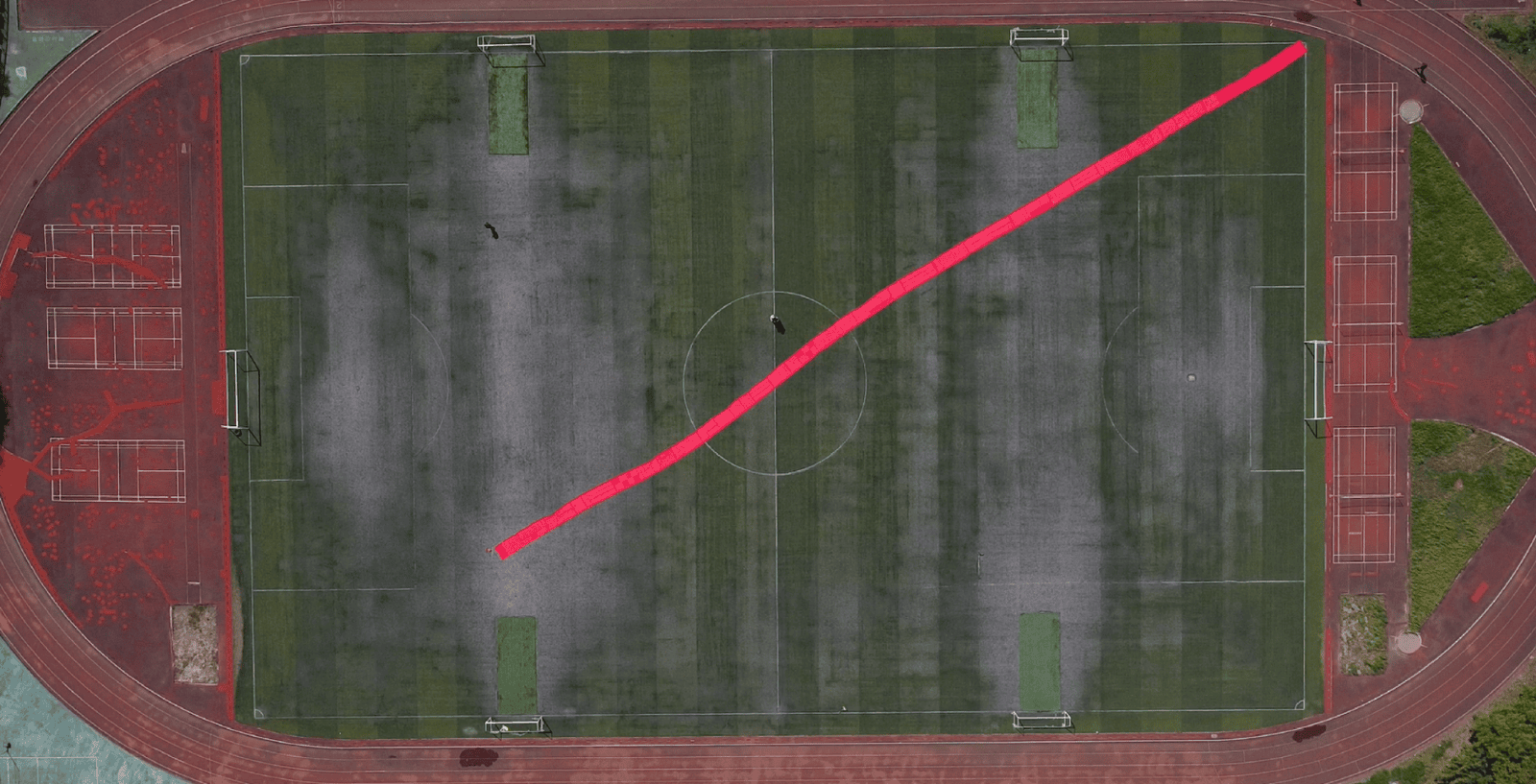
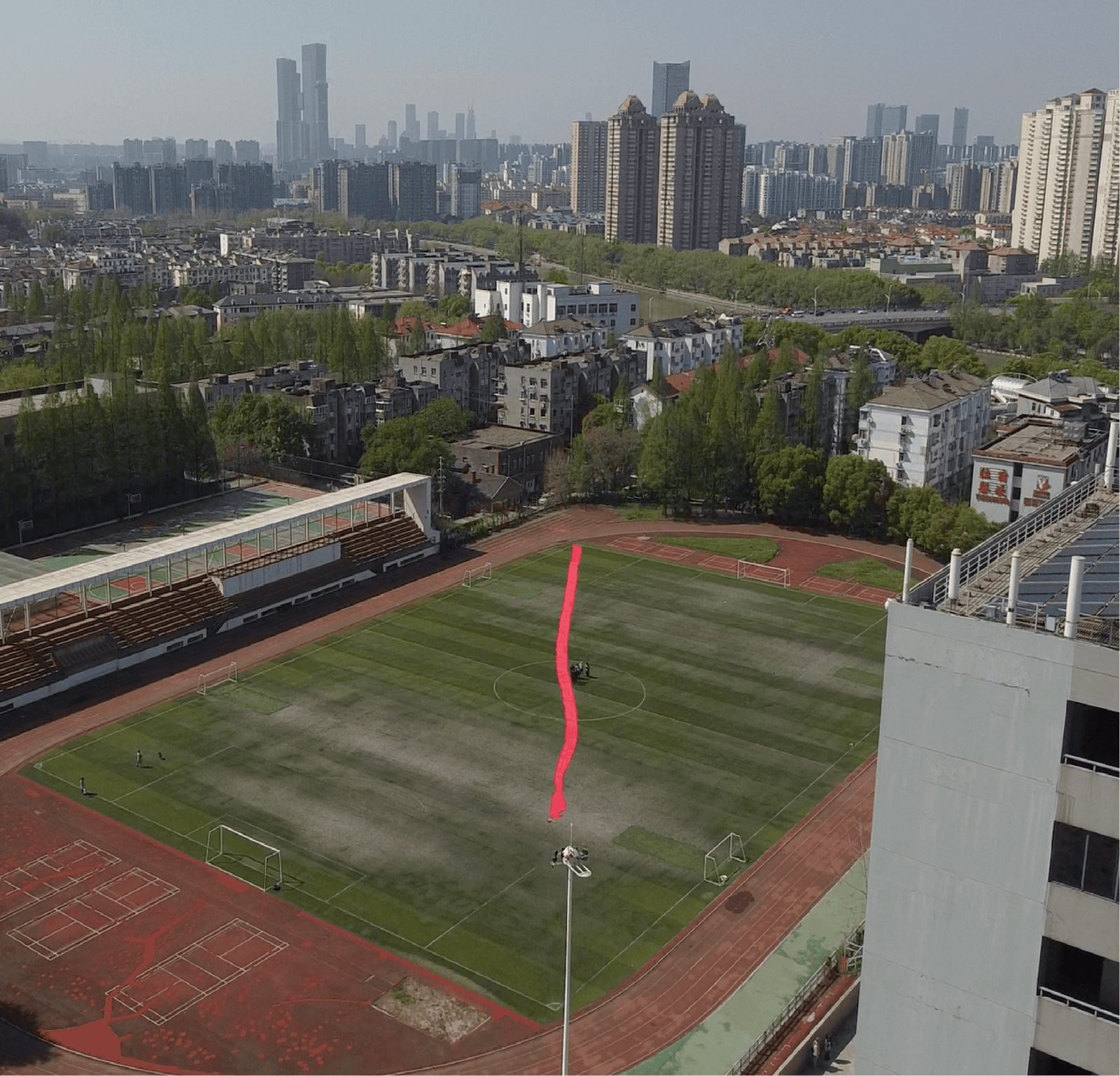
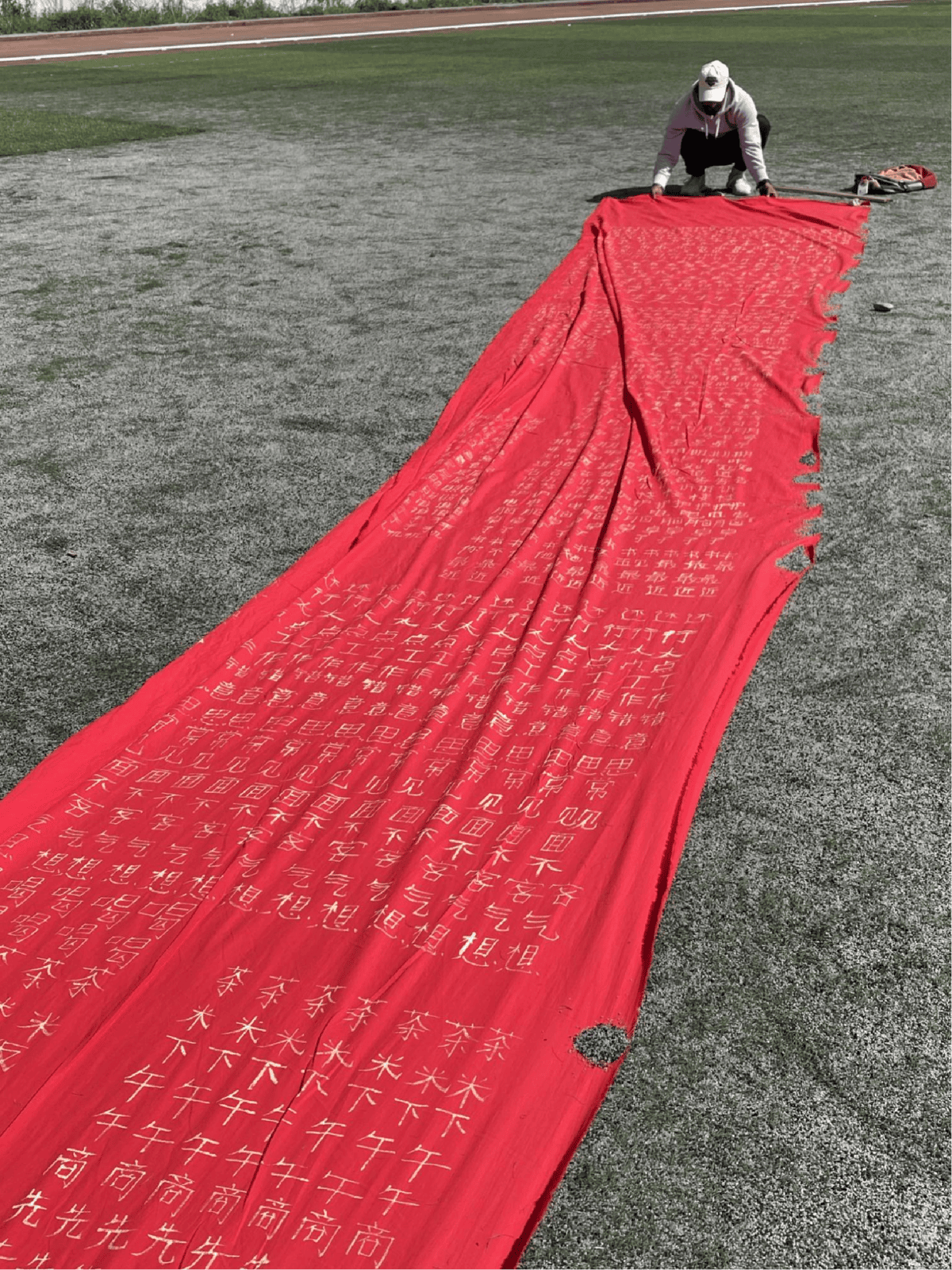
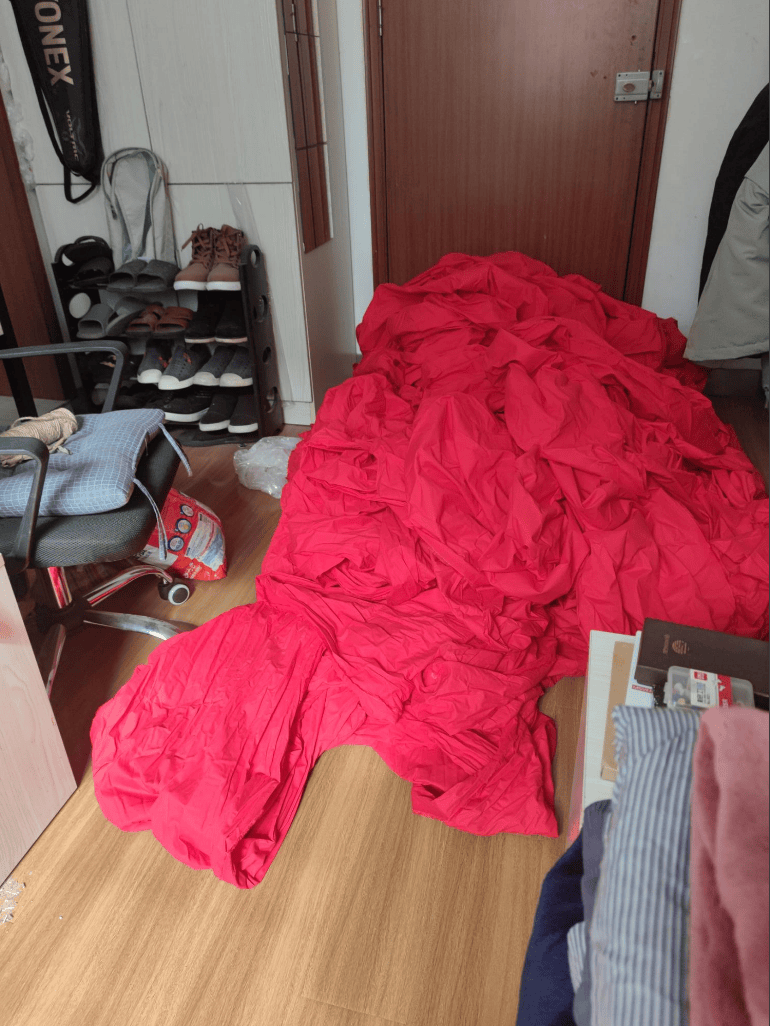
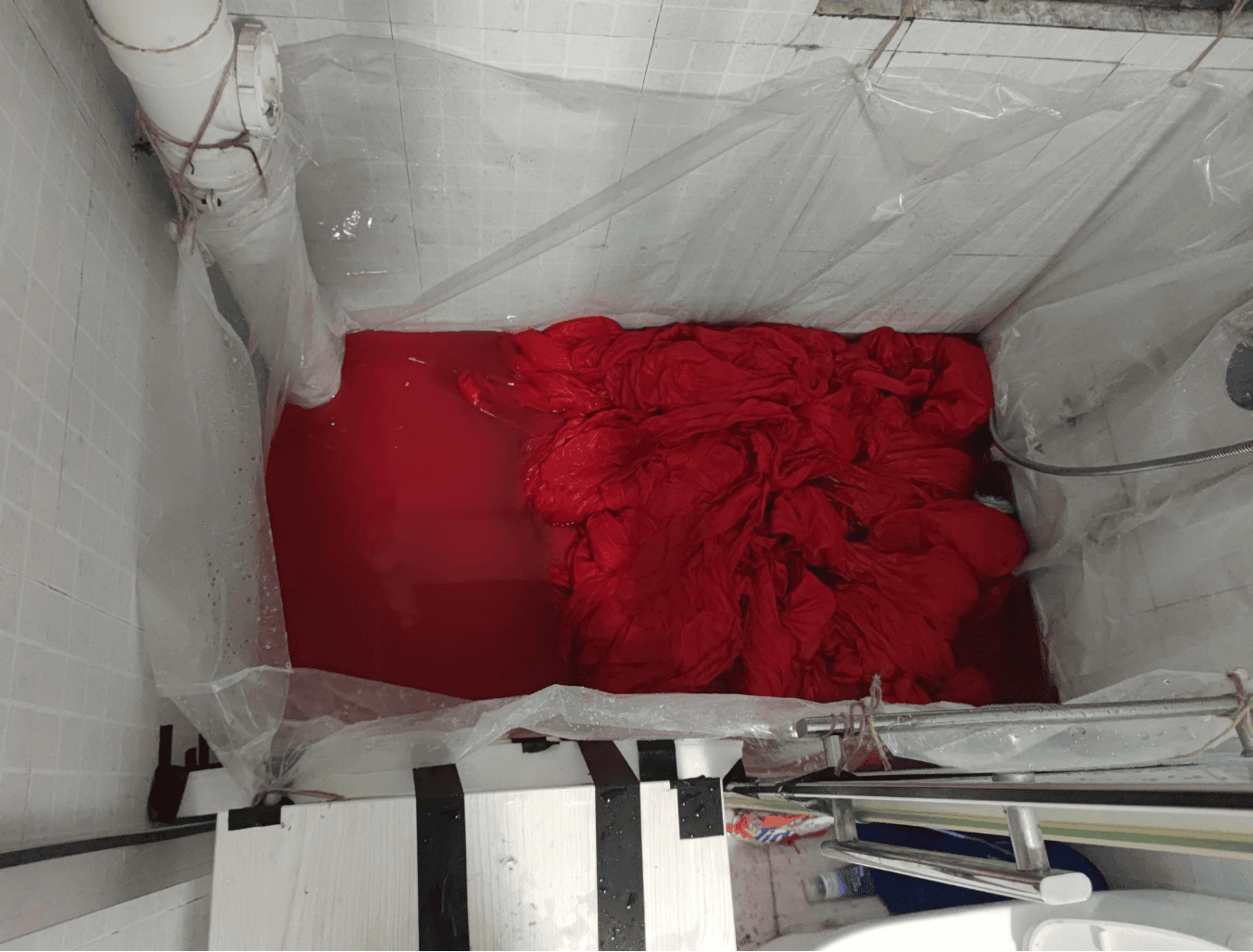
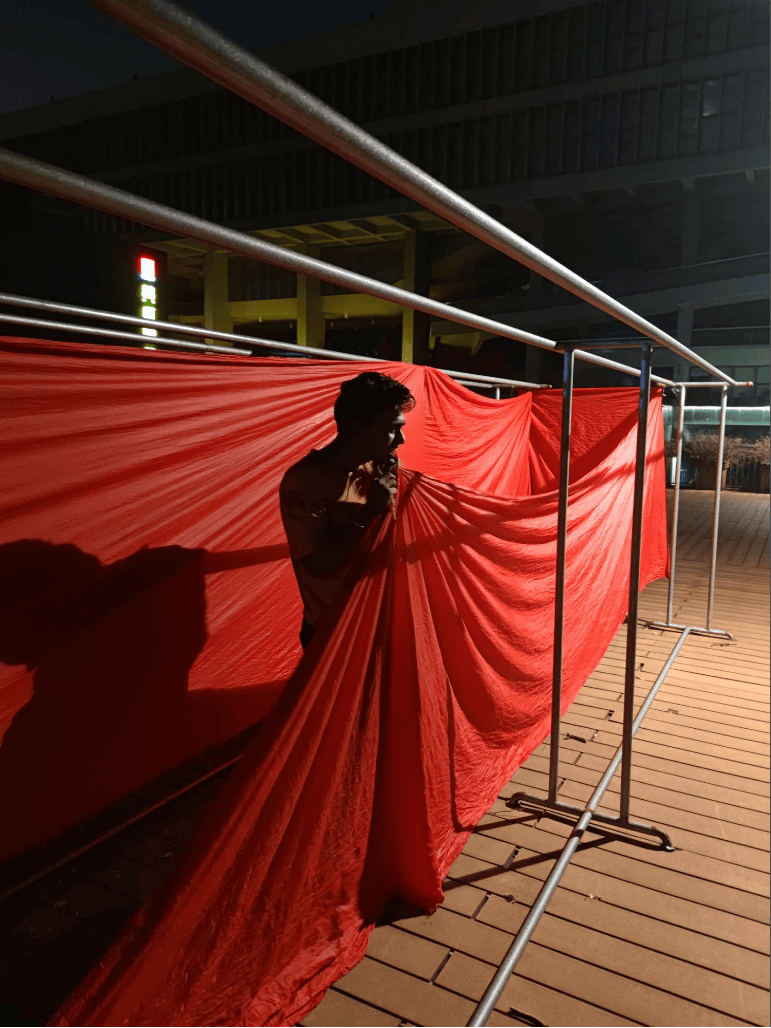
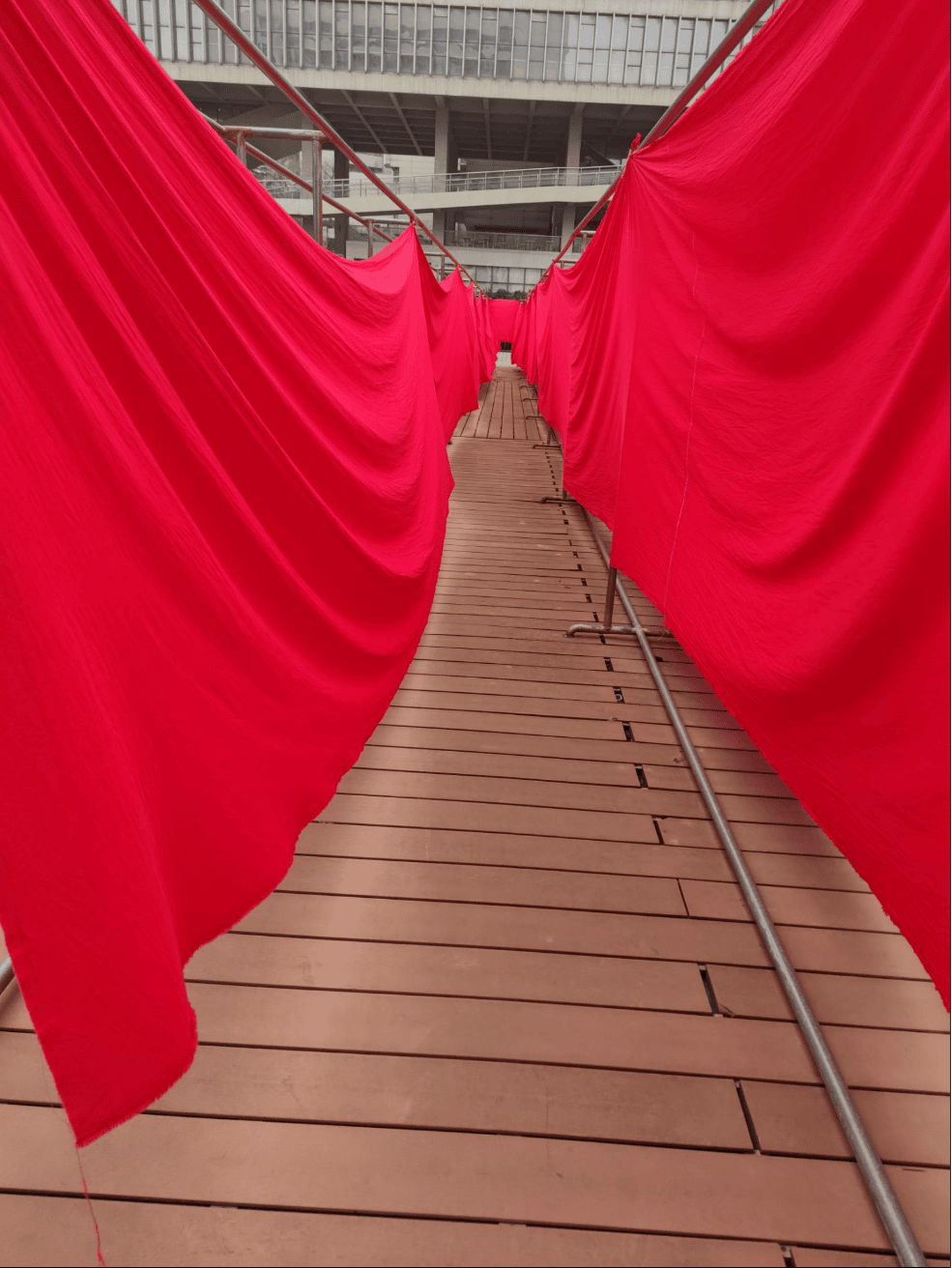
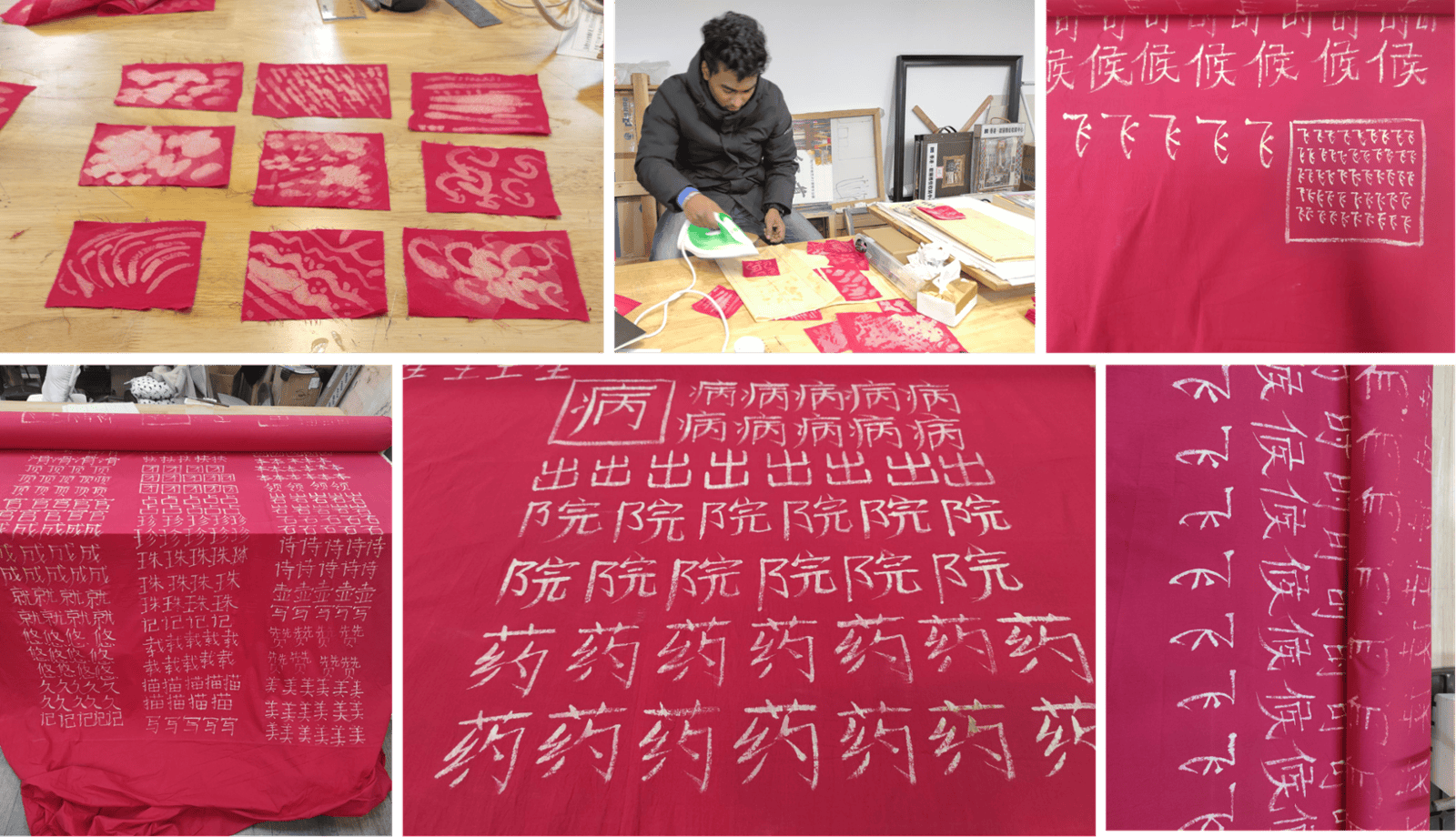
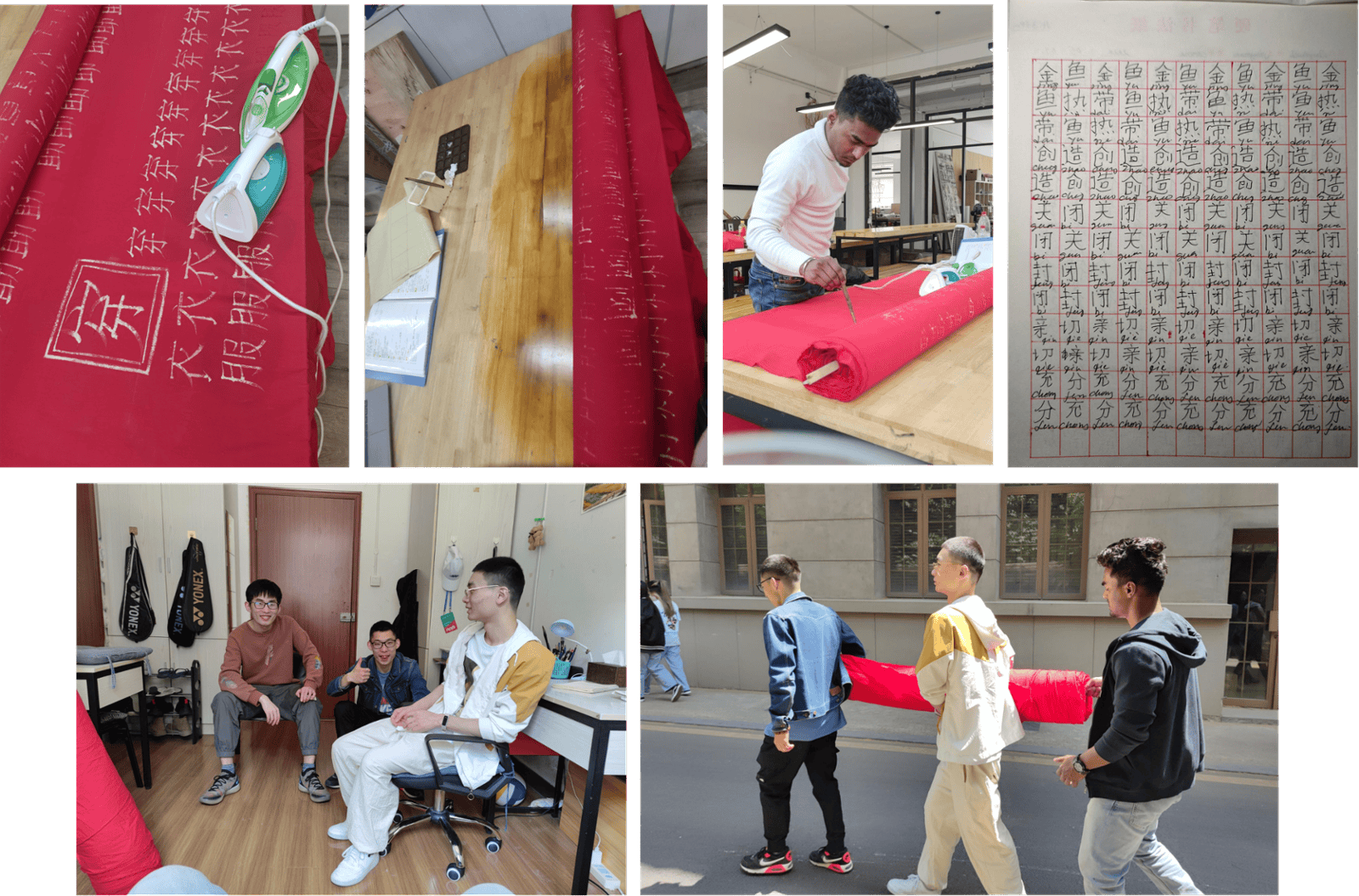
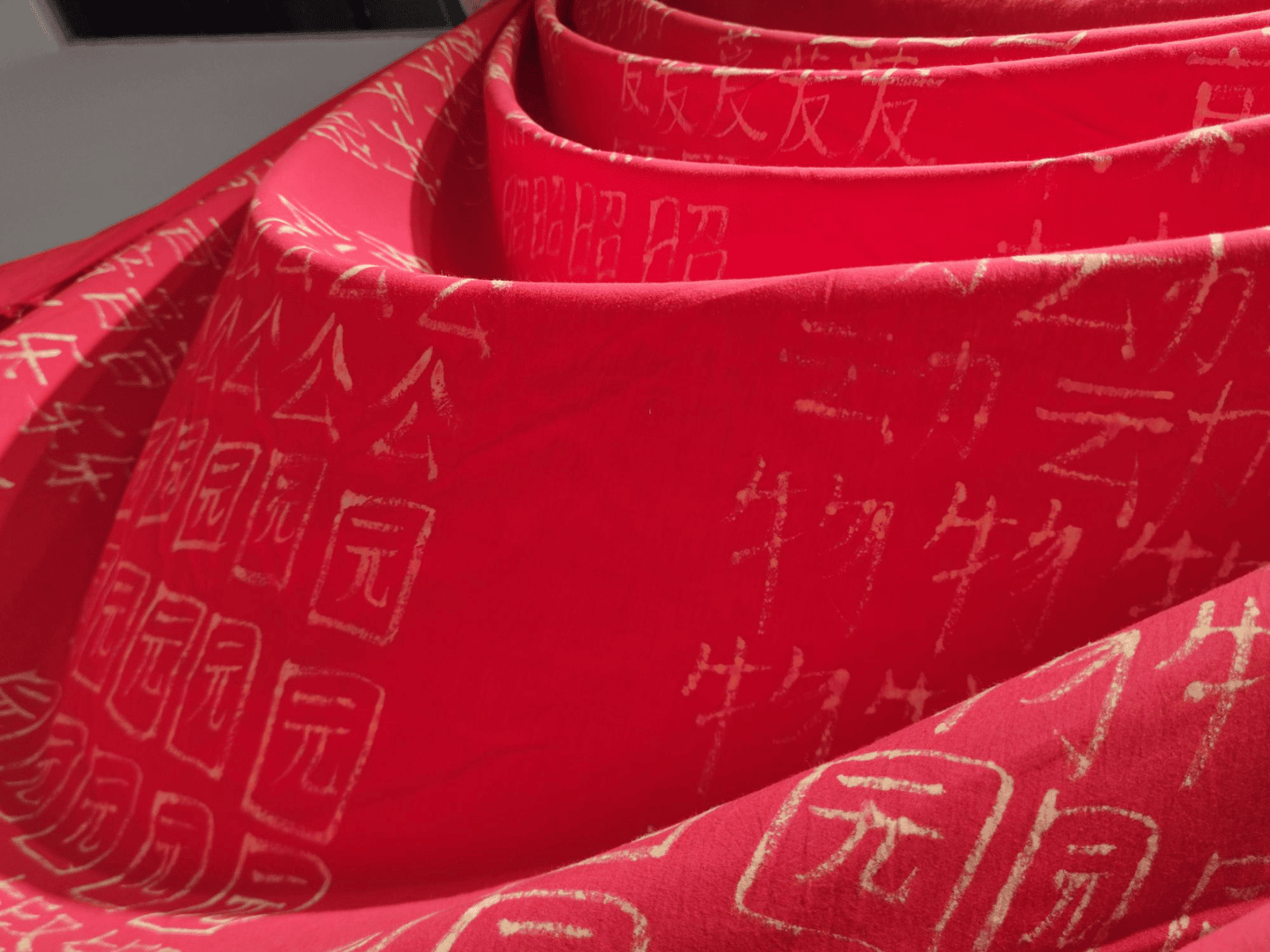
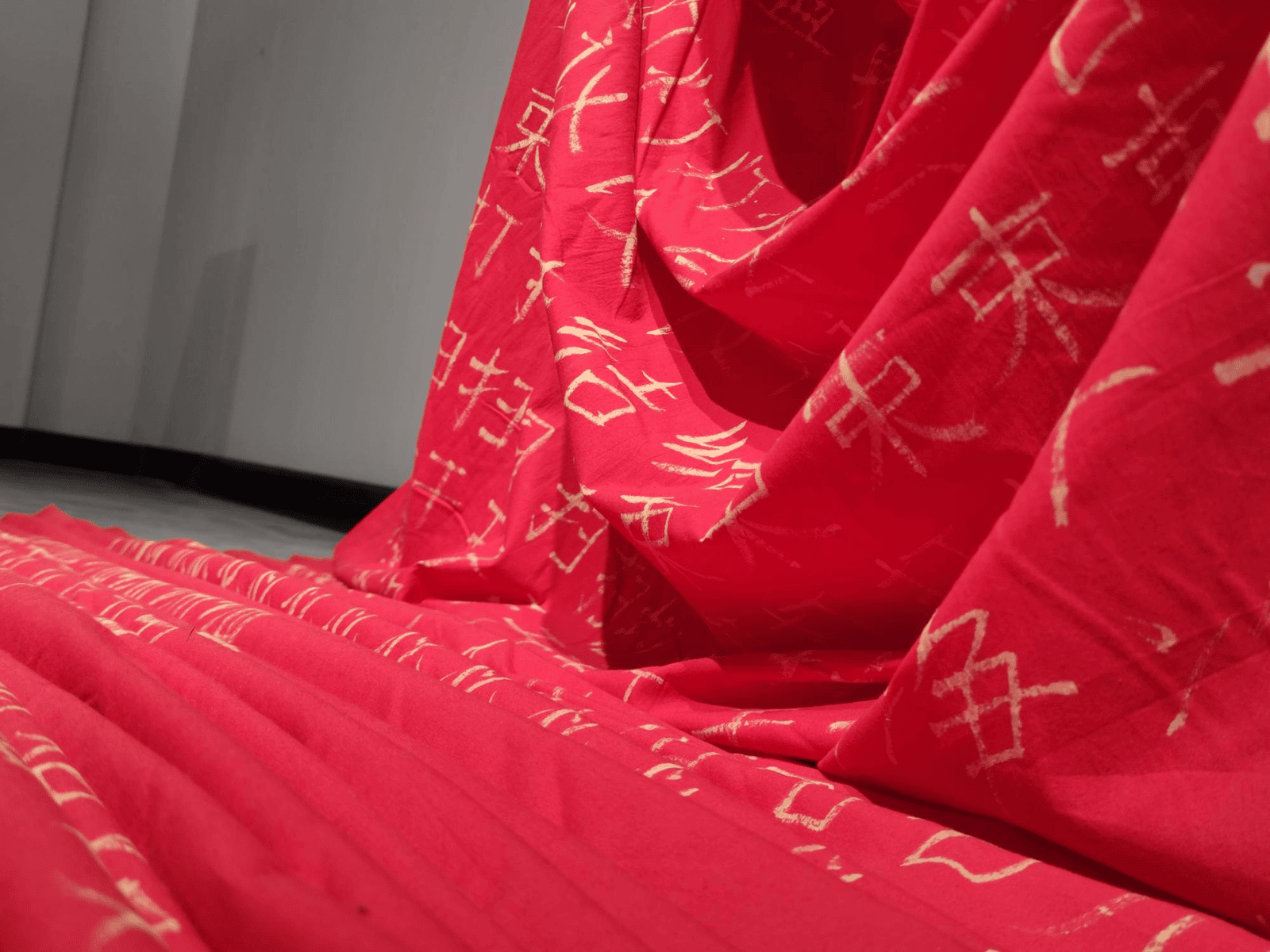
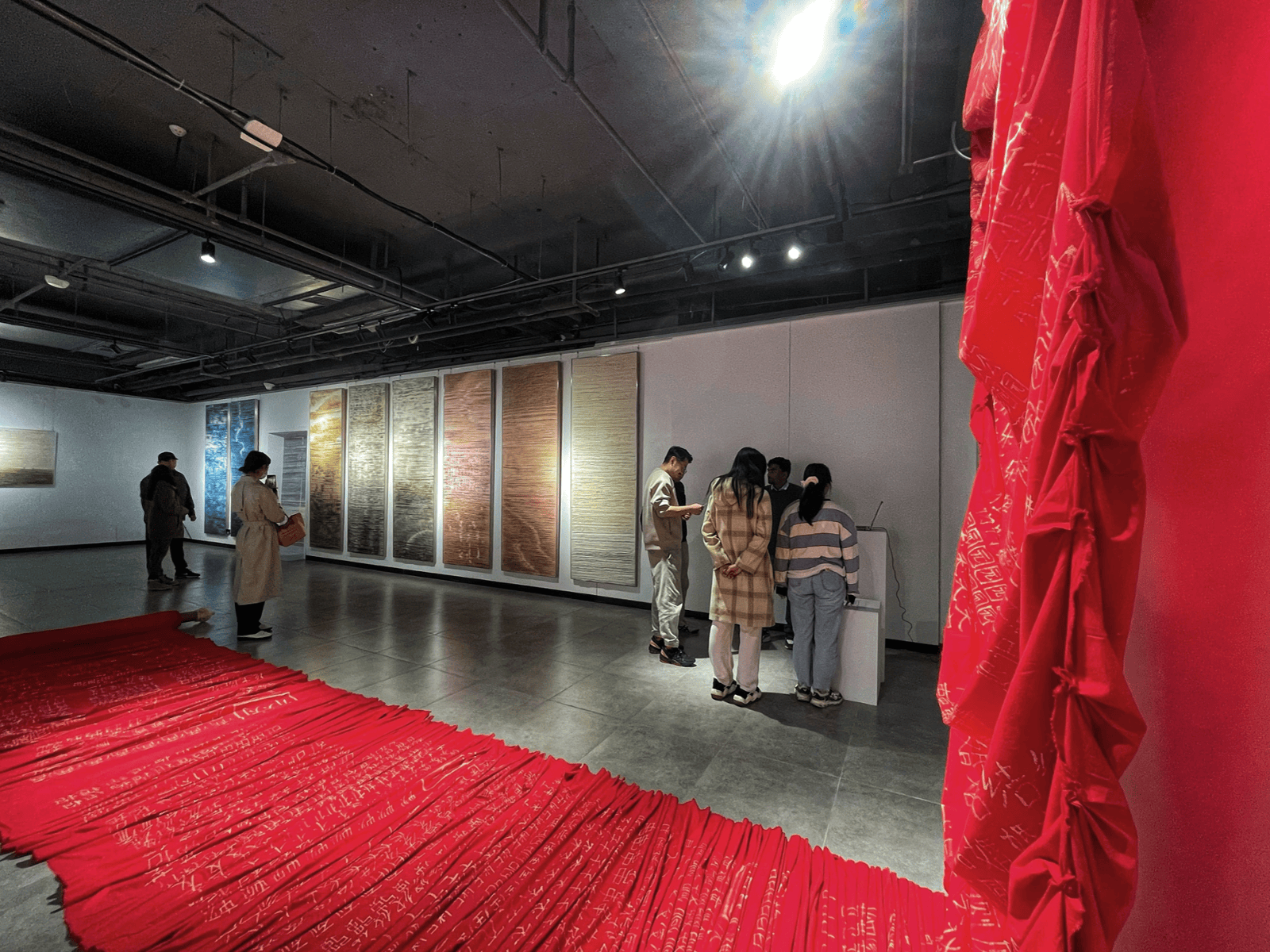
My 100-meter-long artwork reflects this learning journey and its impact on my daily life in China. It captures my progress, constant practice, and language growth. I even included corrected marks and red lines from my actual Chinese exam papers. I chose to keep these mistakes because errors are an essential part of learning. Showing honest mistakes matters more to me than hiding them behind a fake perfection. The artwork’s length symbolizes the time needed to truly absorb a new skill. Mastered learning takes a lifetime. My teacher told me that even retired professors keep exploring Chinese in their old age. I have only studied it for two years, but I hope to continue. The length of the stretching fabric directly mirrors this ongoing timeline, which is linked to the future where learning anything is infinite. In Chinese culture, red symbolizes happiness and new beginnings; on the other side, in Indian culture, it represents passion, love, energy, and strength. Through red, I bridge our Indian roots and artistic vision with the Chinese culture I am learning, turning both into a daily lived experience.