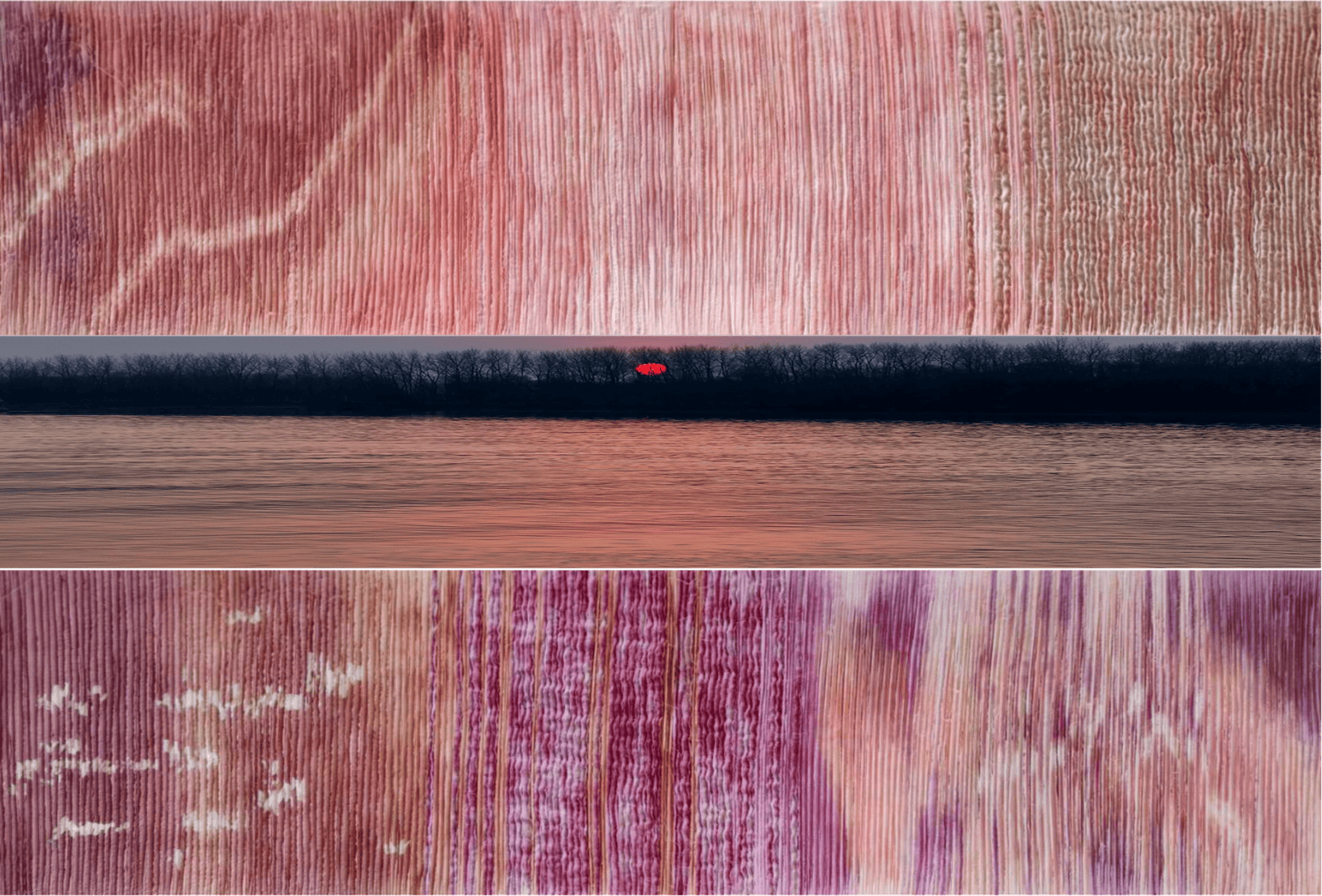
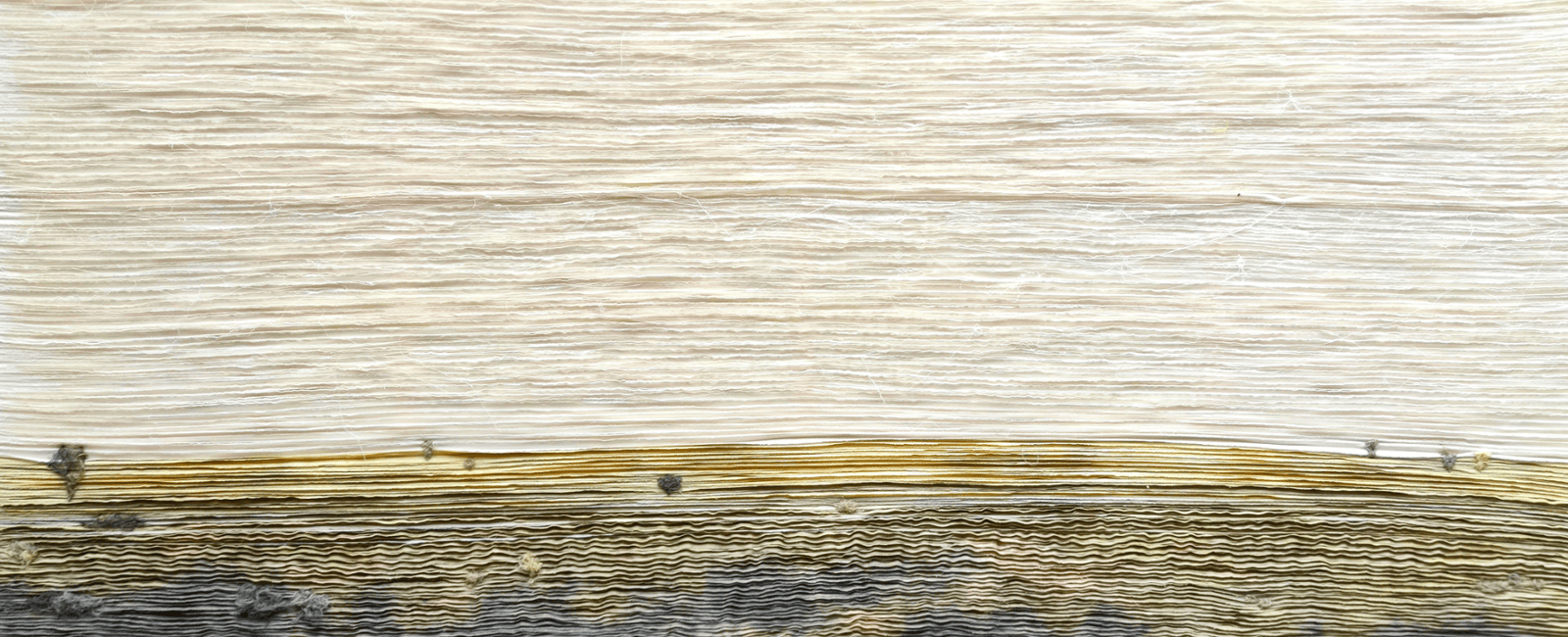
Since I came to China, art, observation, and thinking have become an important part of my everyday life. This became especially strong during the COVID-19 period from 2019 to 2023, when I was living between Nanjing and Shanghai. Living in a different culture slowly made me understand the rhythm of Shanghai. I started observing my own position in the city and thinking about how I connect with Shanghai and with the wider world. The Huangpu River gives me a way to understand this connection. It shows how our understanding of the world is also shaped by the shared experiences of cities over time. A river is not only part of the geography of a city. It also connects the city with other places through trade, cultural exchange, and migration. Historically, rivers and waterways have played an important role in connecting different cultures. During the Tang Dynasty, for example, many Buddhist monks and scholars travelled from places such as Shandong and Guangzhou through Southeast Asia towards India. People like Yijing, Changmin, Huining, Yunqi, Dachengdeng, Mingyuan, Yilang, Zhian, Bian'an, Kuichong, Huichao, Daolin, Motisenghe, and Xuankui travelled through these routes. Their journeys helped create exchanges in Buddhist practice, language, and visual culture.
This shows that waterways were not only routes for travel. They also helped people from different cultures meet, exchange ideas, and grow together. But in today’s world, some of these same waterways have become connected with political interests, territory, and resources and have become part of geopolitical conflicts. In some cases, these conflicts have also led to forced migration. This creates a very different situation from the way waterways once connected people and cultures. For me, the river represents both nature and human connection. It continues to flow through time while also carrying the history of people, cultures, and movements. Rivers connect different parts of the world and remind us that different societies have been connected in some way since the beginning of human civilization. This connection goes beyond political boundaries and continues through time.
Since I came to China, art, observation, and thinking have become an important part of my everyday life. This became especially strong during the COVID-19 period from 2019 to 2023, when I was living between Nanjing and Shanghai. Living in a different culture slowly made me understand the rhythm of Shanghai. I started observing my own position in the city and thinking about how I connect with Shanghai and with the wider world. The Huangpu River gives me a way to understand this connection. It shows how our understanding of the world is also shaped by the shared experiences of cities over time. A river is not only part of the geography of a city. It also connects the city with other places through trade, cultural exchange, and migration. Historically, rivers and waterways have played an important role in connecting different cultures. During the Tang Dynasty, for example, many Buddhist monks and scholars travelled from places such as Shandong and Guangzhou through Southeast Asia towards India. People like Yijing, Changmin, Huining, Yunqi, Dachengdeng, Mingyuan, Yilang, Zhian, Bian'an, Kuichong, Huichao, Daolin, Motisenghe, and Xuankui travelled through these routes. Their journeys helped create exchanges in Buddhist practice, language, and visual culture.
This shows that waterways were not only routes for travel. They also helped people from different cultures meet, exchange ideas, and grow together. But in today’s world, some of these same waterways have become connected with political interests, territory, and resources and have become part of geopolitical conflicts. In some cases, these conflicts have also led to forced migration. This creates a very different situation from the way waterways once connected people and cultures. For me, the river represents both nature and human connection. It continues to flow through time while also carrying the history of people, cultures, and movements. Rivers connect different parts of the world and remind us that different societies have been connected in some way since the beginning of human civilization. This connection goes beyond political boundaries and continues through time.
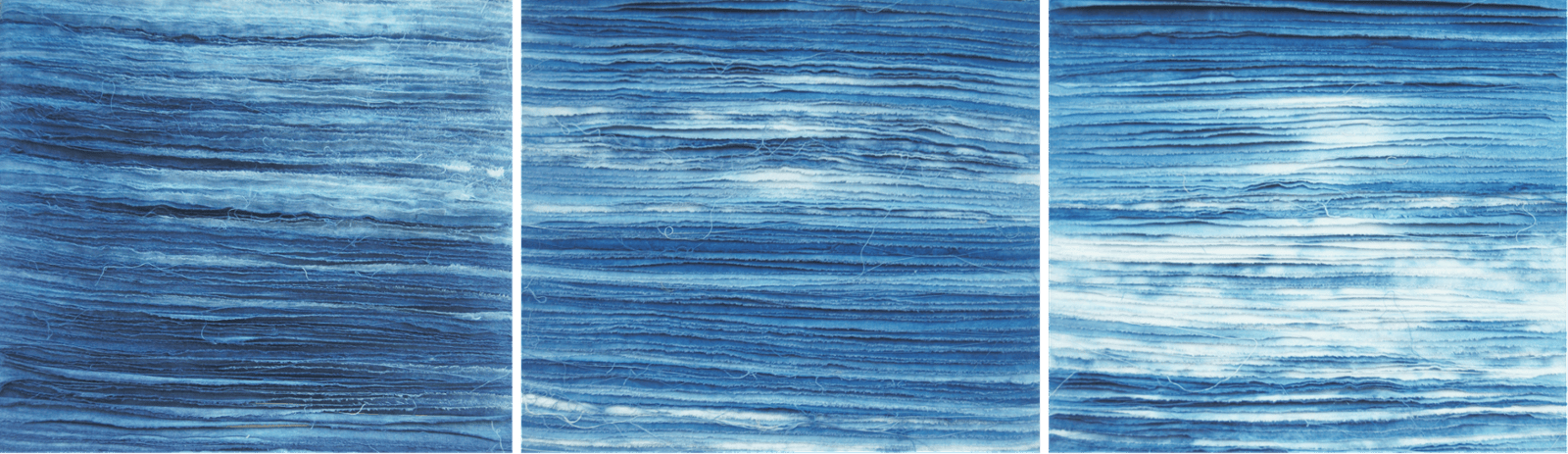

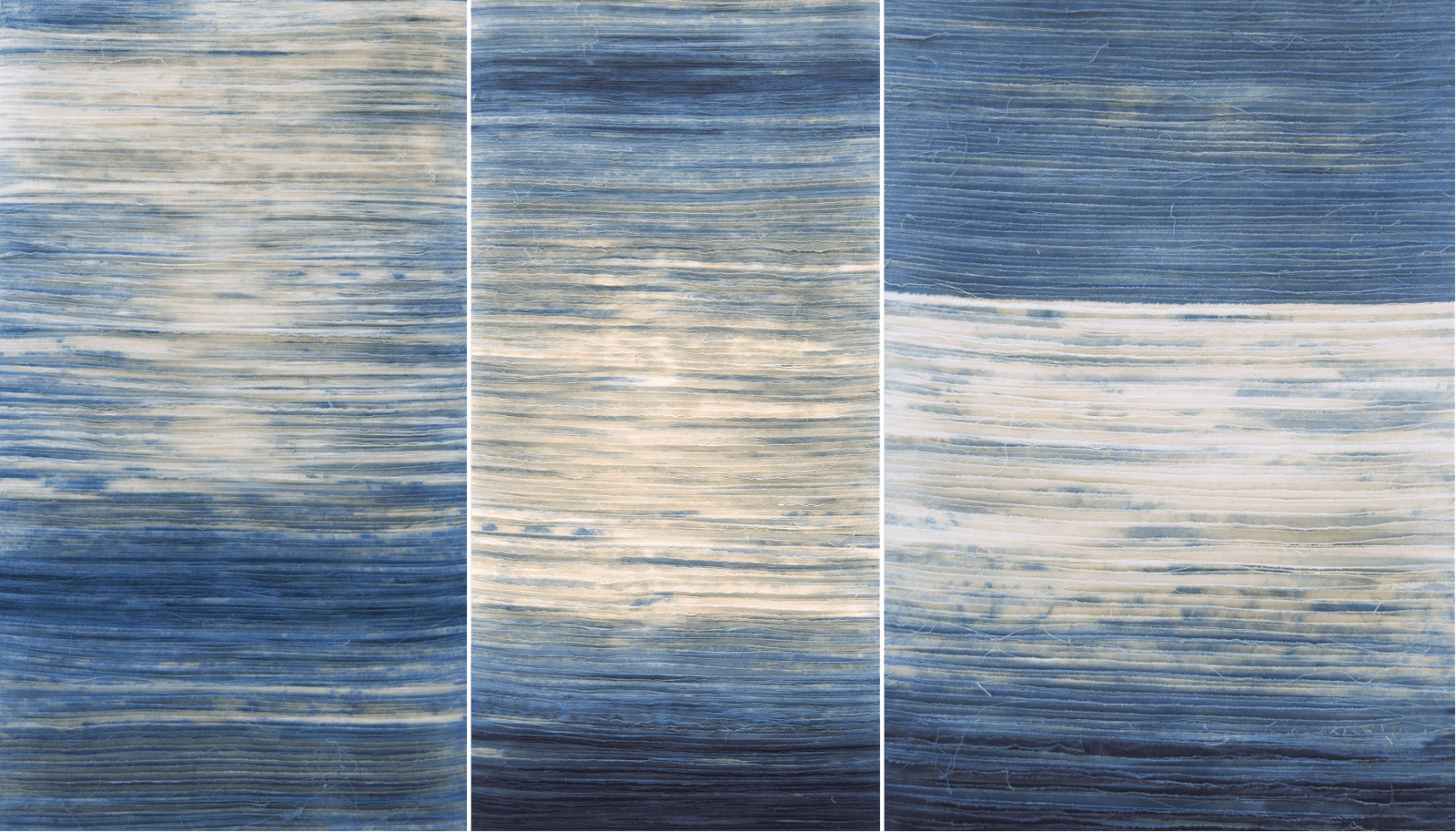
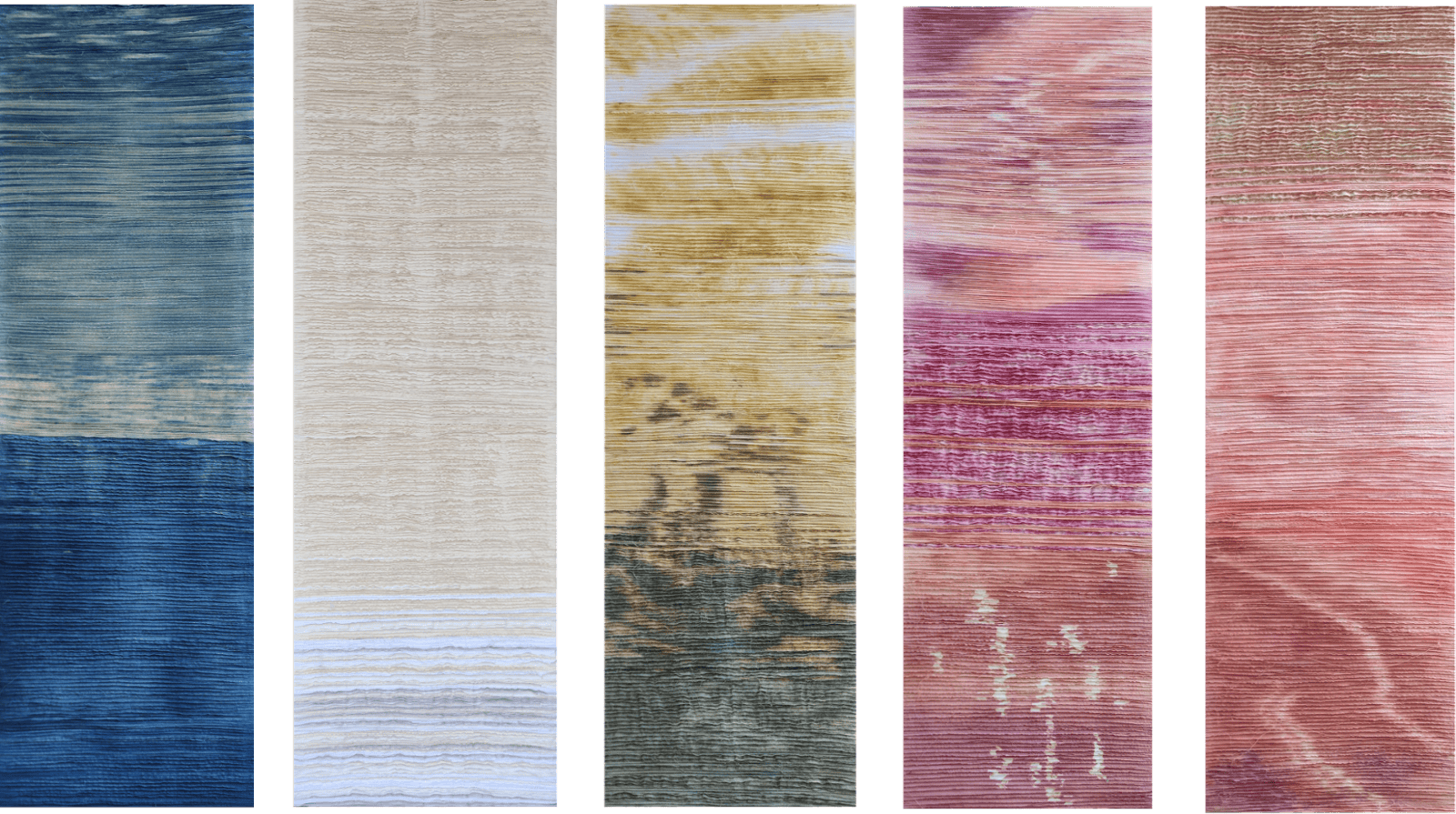
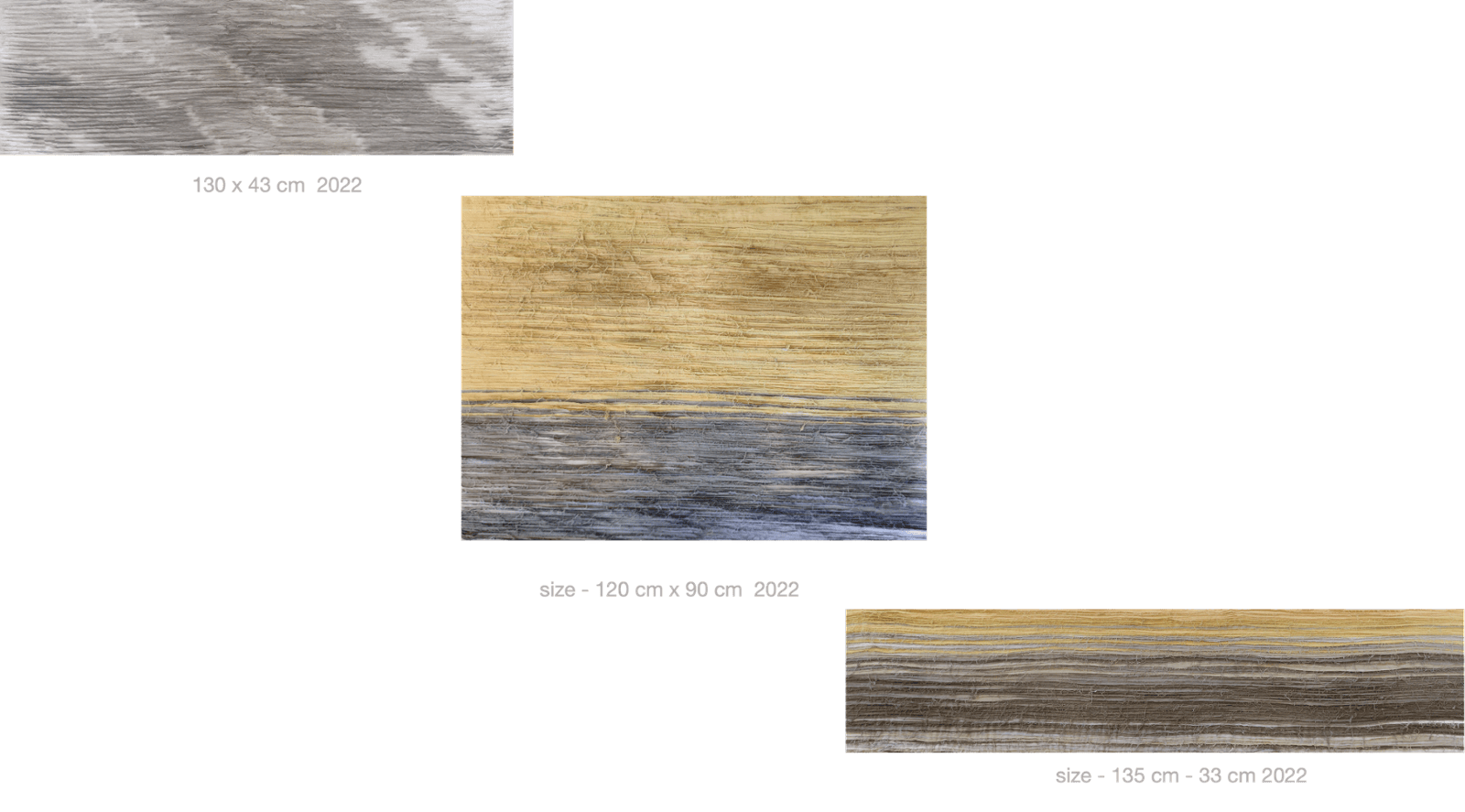
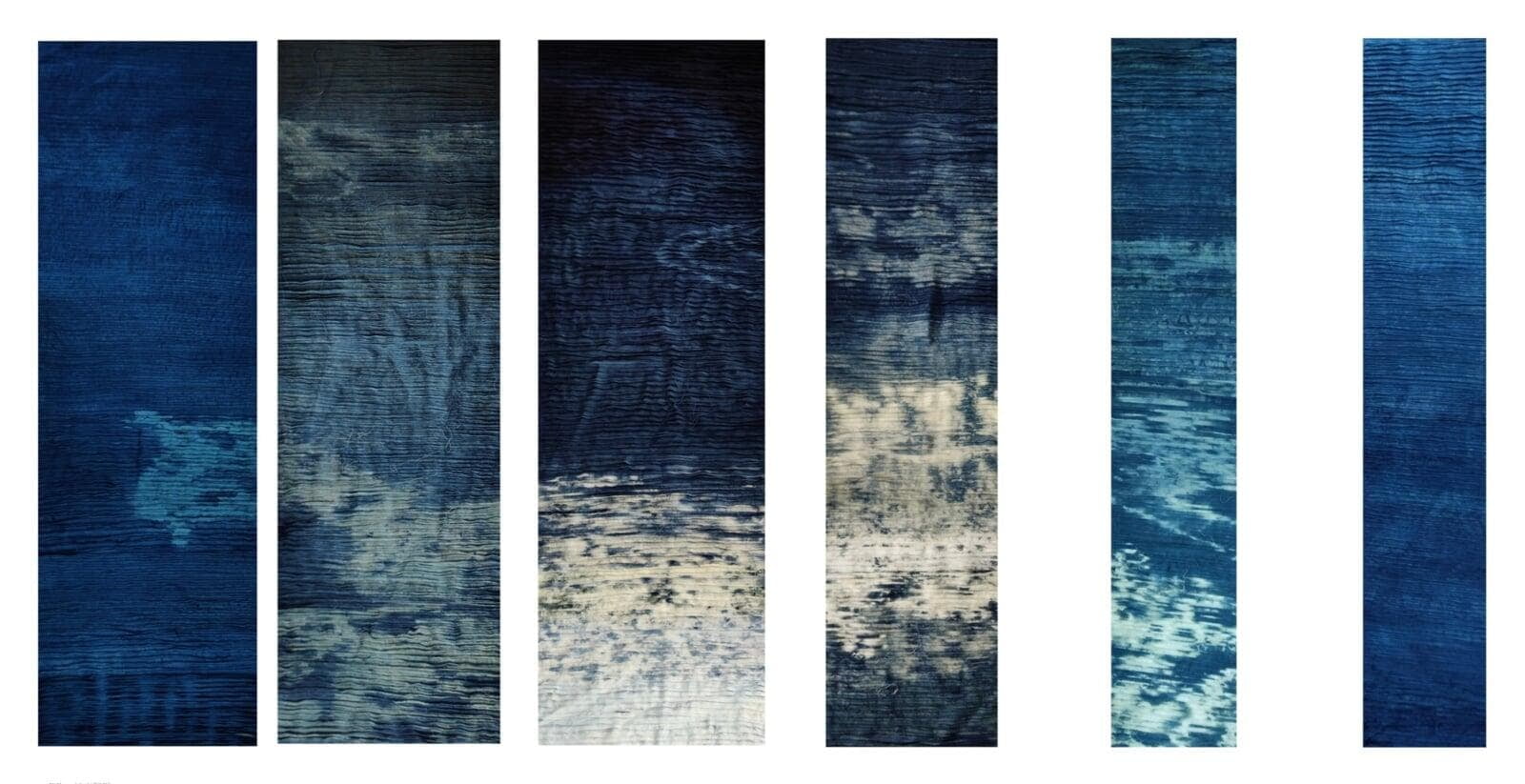
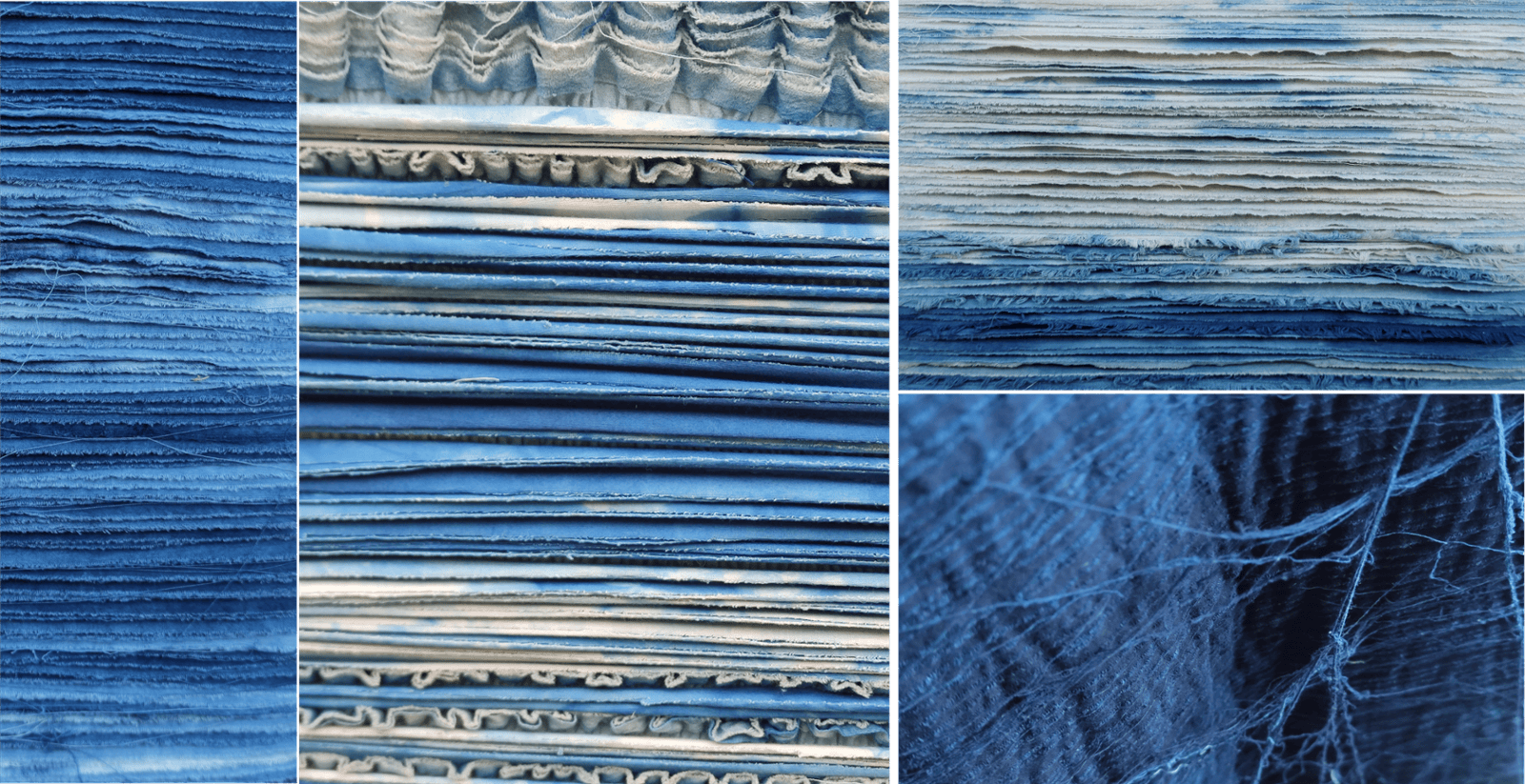
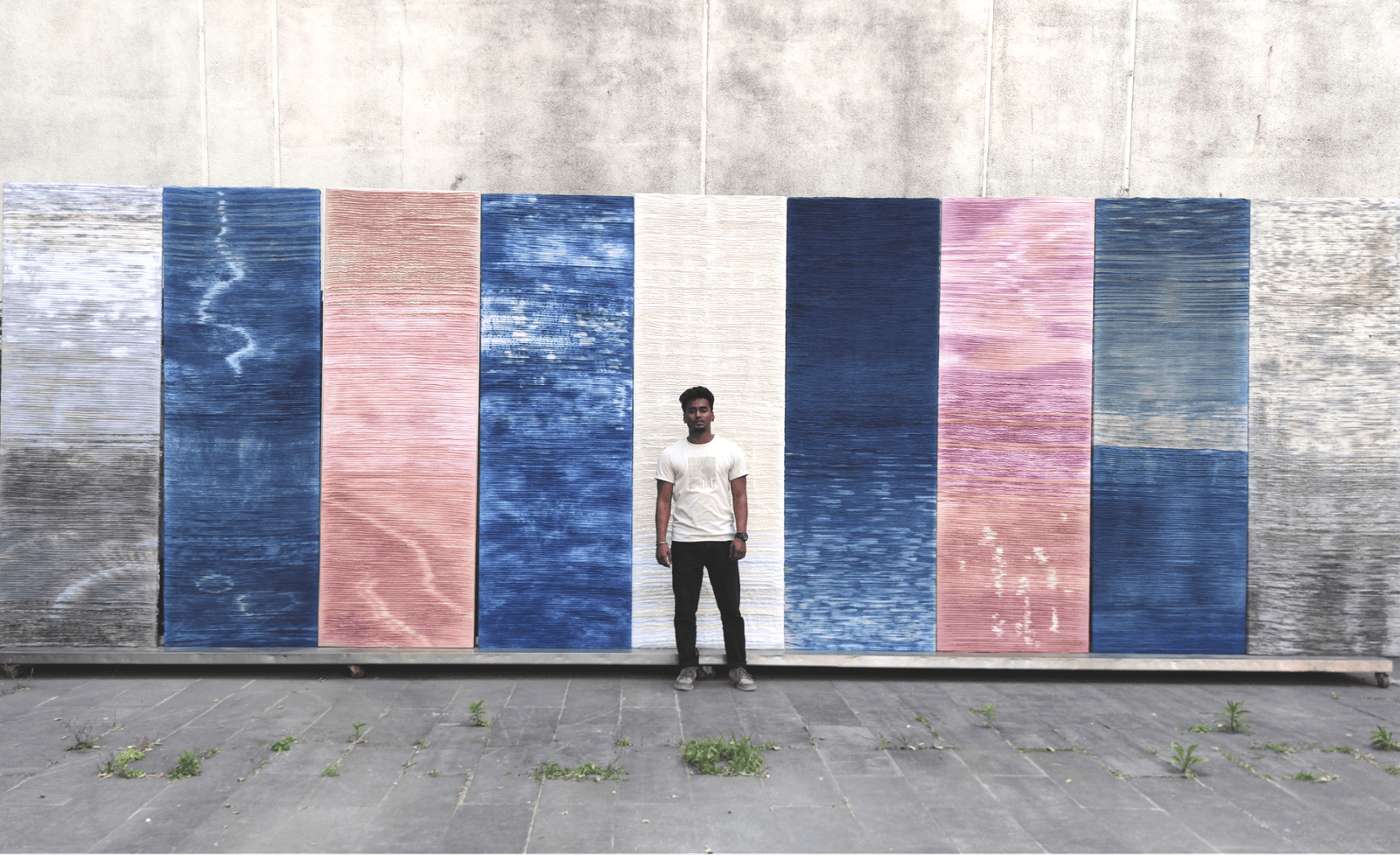
During the making process, my stitched works started connecting with the reflections, movements and waves in water. Some works show the endless distance of the sea, while others focus on the changing reflection of light and shadow. I also made some large panel works and arranged them as a group. They work like memories and metaphors. I often change their sizes, using smaller or larger panels depending on how they look together and how the visual balance feels. This work explores the connection between water, reflection and human emotions through many small moments from everyday life. It also looks at the fast pace of city life and our constant search for some quietness and rest. Through this work, I think about the feeling of floating through modern civilisation—moving with everything around us while trying to find a moment of stillness. The work brings together my inner experience and the outside environment, much like different things coming together in water. It also reflects my own effort to make life simpler. Through the work, my personal memories and experiences come together with something as universal as water, creating a quiet space to think about life, memory and human experience.
During the making process, my stitched works started connecting with the reflections, movements and waves in water. Some works show the endless distance of the sea, while others focus on the changing reflection of light and shadow. I also made some large panel works and arranged them as a group. They work like memories and metaphors. I often change their sizes, using smaller or larger panels depending on how they look together and how the visual balance feels. This work explores the connection between water, reflection and human emotions through many small moments from everyday life. It also looks at the fast pace of city life and our constant search for some quietness and rest. Through this work, I think about the feeling of floating through modern civilisation—moving with everything around us while trying to find a moment of stillness. The work brings together my inner experience and the outside environment, much like different things coming together in water. It also reflects my own effort to make life simpler. Through the work, my personal memories and experiences come together with something as universal as water, creating a quiet space to think about life, memory and human experience.